
How Healthy Environments Support Stronger Communities
By Warren Tyler
A healthy environment is often spoken about as if it were a luxury, something nice to have once more urgent problems are solved. In reality, it works the other way around. Clean air, safe water, decent sanitation, reliable waste services, green public spaces, and healthy natural systems are among the basic conditions that allow communities to function well in the first place. The World Health Organisation says good health depends on clean air, a stable climate, a preserved natural environment, and access to adequate water, sanitation, and hygiene. It also notes that a healthy environment could prevent nearly a quarter of the global disease burden.
That matters in South Africa, where environmental conditions are tightly linked to everyday life. When water systems work, households save time and face fewer health risks. When waste is collected properly, neighbourhoods are cleaner and safer. When rivers, wetlands, and catchments are protected, towns and cities are more likely to have reliable water. And when green spaces are accessible, communities gain places for rest, movement, and connection. A healthy environment is not separate from social well-being. It helps create it.
Strong communities start with the basics
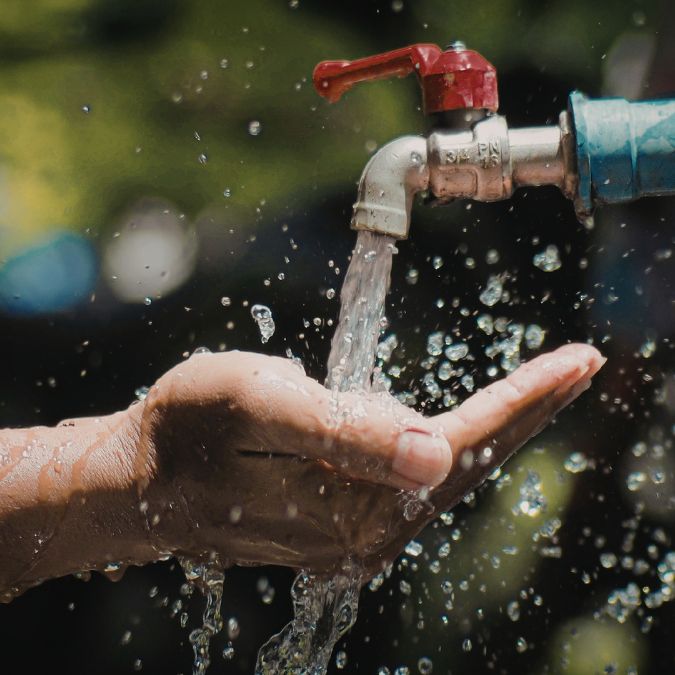
One of the clearest ways healthy environments support communities is through the basics people use every day. Safe drinking water, sanitation, and hygiene are not only health services. WHO says they also support livelihoods, school attendance, dignity, and more resilient communities. That is a useful reminder that environmental conditions shape whether people can learn, work, care for their families, and move through daily life with some stability.
South Africa’s 2024 General Household Survey shows both progress and pressure. An estimated 46.4% of households had piped water in their dwelling in 2024, while a further 30.4% had water on-site. At the same time, water reliability remains a serious issue. Among households receiving municipal water, 55.2% reported interruptions during the year, and about one-third reported dysfunctional water supply services. Those numbers show why environmental health is not only about long-term conservation language. It is also about whether communities can rely on the systems that keep daily life moving.

Cleaner surroundings support healthier neighbourhoods
Healthy environments also make communities stronger by reducing everyday exposure to risk. Waste that is not collected properly not only looks bad. It can attract pests, block drainage, pollute water, and add to smoke and air pollution when people are forced to burn it. In South Africa, these pressures are visible at the household level. Stats SA found that, in 2024, 40.5% of households identified waste removal problems and littering as environmental issues in their area, while 36.8% cited land degradation and soil erosion. The same survey notes that burning household waste poses significant health and environmental risks because it contributes to air pollution and can harm people with respiratory or heart conditions.
This is why healthy environments build stronger communities in a very practical sense. Cleaner neighbourhoods are easier to live in, safer for children, and less likely to expose residents to preventable illness. WHO’s urban health guidance makes the same point more broadly: poor sanitation, poor waste management, pollution, and degraded urban environments worsen infectious disease, noncommunicable disease, injuries, and mental ill health, with the poorest residents usually affected most.
Green space does more than make places look better
There is also a social side to healthy environments that is often underestimated. Parks, trees, playgrounds, wetlands, and public green spaces do more than improve a neighbourhood’s appearance. WHO’s work on urban green spaces says these spaces can promote mental and physical health, reduce morbidity and mortality, support physical activity, reduce exposure to air pollution, noise, and heat, and strengthen social cohesion. That last point matters. Strong communities are not built only through services and infrastructure. They are also built through connection, belonging, and shared public life.
This is especially relevant as South Africa continues to urbanise. UN-Habitat describes the country as one of the most urbanised in Africa, with around 67% of its population living in urban areas. WHO’s 2025 urban health fact sheet notes that more than 55% of the world’s population lives in urban areas, and this share is expected to rise to 68% by 2050. As more people live in towns and cities, the quality of the urban environment will matter even more. Streets, transport, waste systems, green spaces, water access, and air quality will all shape whether communities feel strained and fragmented or healthy and connected.
Healthy ecosystems support communities too
Healthy environments are not limited to what happens inside towns and neighbourhoods. Communities also depend on the wider natural systems around them. South Africa’s Strategic Water Source Areas are a good example. According to Stats SA and SANBI, these areas support half of South Africa’s population, provide almost all the water used by cities, supply about 70% of irrigation water, and underpin around two-thirds of the economy. The same factsheet explains that protecting these systems helps maintain clean water, supports food security, and strengthens drought resilience.
That means a healthy wetland, river system, or catchment is not only an environmental asset. It is part of the country’s social and economic foundation. South Africa’s ecological infrastructure work makes this even clearer, describing wetlands, rivers, and Strategic Water Source Areas as the nature-based equivalent of built infrastructure. It says that healthy ecological infrastructure can improve water quality, reduce flood damage, increase soil water storage, and support water security, while also creating jobs and strengthening local economies.