
By Catherine Pretorius
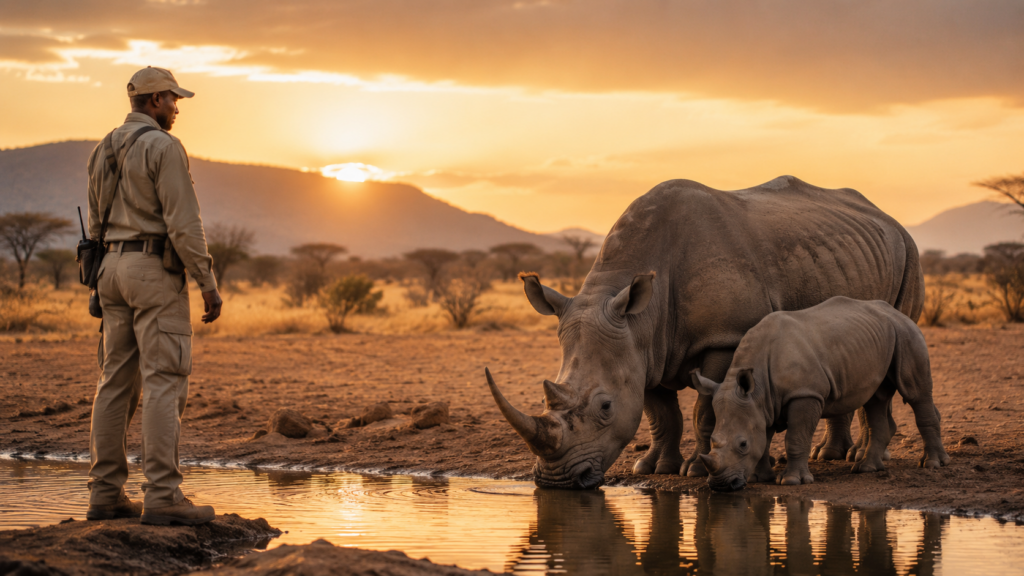
South Africa’s rhino story has never been simple. It’s a story of extraordinary conservation effort, immense financial pressure, brutal poaching, and growing tension over what real protection should look like. But according to a July 2026 public statement by the Wildlife Animal Protection Forum of South Africa, or WAPFSA, the country has now reached a far more serious point: a policy crossroads that could reshape rhino conservation for years to come. WAPFSA argues that South Africa’s rhinos are facing a critical tipping point not only because of poaching, but because of legal and political developments that may normalise commercial trade in rhino horn.
At the heart of this concern is a recent court battle involving a private rhino breeding operation in the Northern Cape. The case centres on an attempt to export a large stockpile of rhino horns, with the argument that legal sales could help cover the high costs of anti-poaching security, feeding, veterinary care, and general conservation management. WAPFSA sees the matter very differently. In its view, this is not simply a dispute about permits or property rights. It’s a test of whether South Africa’s conservation future will be shaped by constitutional biodiversity protection or by increasing acceptance of wildlife trade as a commercial solution.
That is what makes the issue so important. For supporters of trade, regulated horn exports are often presented as a practical and financially necessary tool. The argument is that private owners carrying the cost of protecting rhinos should be allowed to generate revenue from legally obtained horn. For WAPFSA, however, the danger lies in the wider message such trade sends. The organisation argues that if rhino horn trade is legitimised or facilitated by the courts, it risks stimulating demand by creating a perception of legality in international markets. In other words, what appears to be regulated supply may end up strengthening the same demand that drives illegal killing.
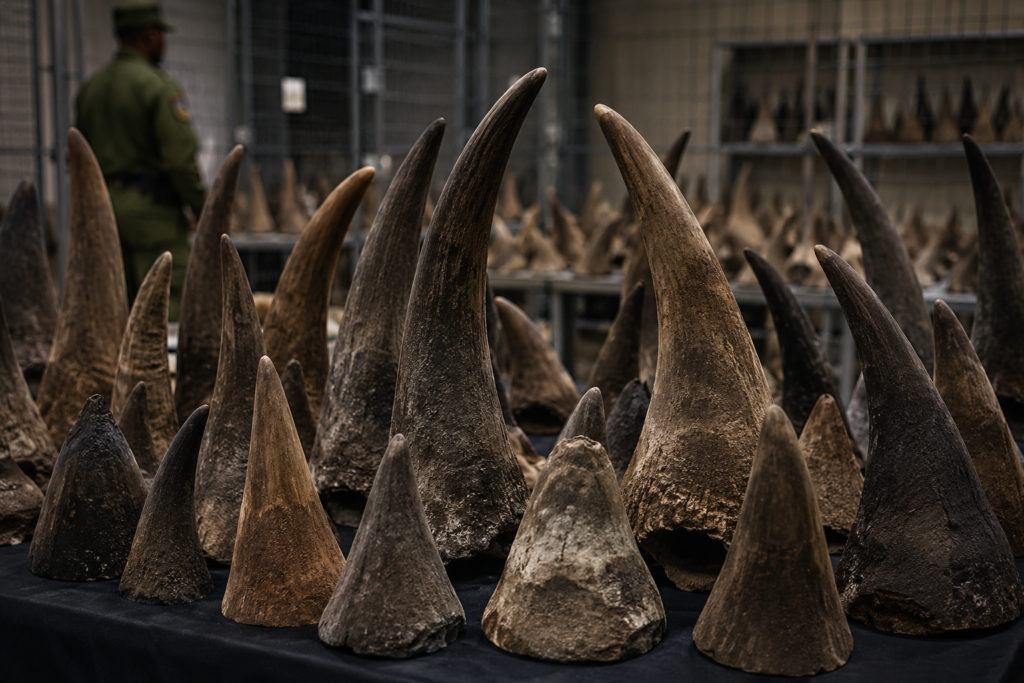
WAPFSA points to history as a warning. It argues that previous legal wildlife trade decisions, such as the one-off sale of elephant ivory in 2008, were followed by a rise in poaching and illegal trade. From this perspective, legal supply doesn’t necessarily reduce criminal activity. It can instead blur the line between legal and illegal markets, making enforcement harder and demand more difficult to control. For rhinos, a species already under severe pressure, that’s a risk with enormous consequences.
The legal background adds another layer. According to the statement, international trade in rhino horn has been banned under CITES since 1977, but the current case relied on a treaty exemption governing wildlife bred in captivity. South Africa’s Department of Forestry, Fisheries and the Environment rejected the relevant export applications, maintaining that the country did not actively implement that exemption for commercial rhino horn trade. The matter then went to court, where the Northern Cape High Court ruled in favour of the private breeder in October 2025 and later dismissed the state’s application for leave to appeal in July 2026. WAPFSA believes this judgement gives too much weight to minimum treaty obligations and too little to South Africa’s Constitution and domestic biodiversity laws.
This is why the organisation sees the matter as bigger than one case. WAPFSA argues that South Africa’s conservation model is being tested in real time. It warns that policy and legal decisions which normalise the stockpiling and sale of rhino horn weaken the ethical and legal foundation of rhino conservation. In its view, the issue is not only poaching in the immediate sense, but the deeper question of whether rhinos are being treated as protected wild animals or as commercial assets whose survival must somehow be funded through the sale of their horns.
The organisation is also critical of broader policy signals. It says recent discussions around the Biodiversity Management Plan for Black and White Rhinoceros have raised concern because they appear to open the door to domestic and international horn trade through controversial interpretations of CITES exemptions. WAPFSA also questions the transparency of policy development after an unpublished internal memorandum prepared for a previous minister began circulating publicly among groups that support commercial horn trade. For the organisation, these developments raise legitimate questions about whose interests are shaping policy and whether conservation decisions are moving in a direction that weakens rather than strengthens protection for rhinos.

Another major concern is the wider rhino breeding industry itself. WAPFSA says that although not every breeder is involved in illegal conduct, the industry in South Africa has been deeply entangled with organised crime. It argues that major commercial breeding operations have, in some instances, used legal domestic systems as cover for trafficking into illegal international markets. That history is important because it complicates the argument that a clean and ethical commercial trade system can simply be separated from the criminal networks that already profit from rhino horn. WAPFSA’s position is that the problem is not just bad actors operating on the margins. It is the risk that trade itself sustains and legitimises the market.
Seen in that light, this isn’t really a story about one breeder, one lawsuit, or even one shipment. It’s a story about direction. South Africa now faces a choice between two very different conservation futures. One path leans toward commercialisation, stockpiling, and the idea that trade can fund protection. The other insists that conservation cannot be reduced to a business model dependent on the sale of animal body parts and that biodiversity must be protected as a public trust for present and future generations. WAPFSA clearly falls into the second camp and argues that ethical conservation requires rejecting the rhino horn trade rather than trying to refine it.

That is why this moment matters so much. South Africa is home to one of the most important rhino populations in the world, and its choices carry influence far beyond its borders. If it reinforces stronger legal and ethical protections, it can help restore confidence in a conservation model based on public trust, constitutional duty, and long-term biodiversity care. If it moves further toward policies that blur the line between conservation and commerce, the consequences could stretch far beyond one courtroom decision. As WAPFSA frames it, this is not merely a disagreement about wildlife trade. It is a defining test of South Africa’s commitment to protect biodiversity in the interests of present and future generations.